
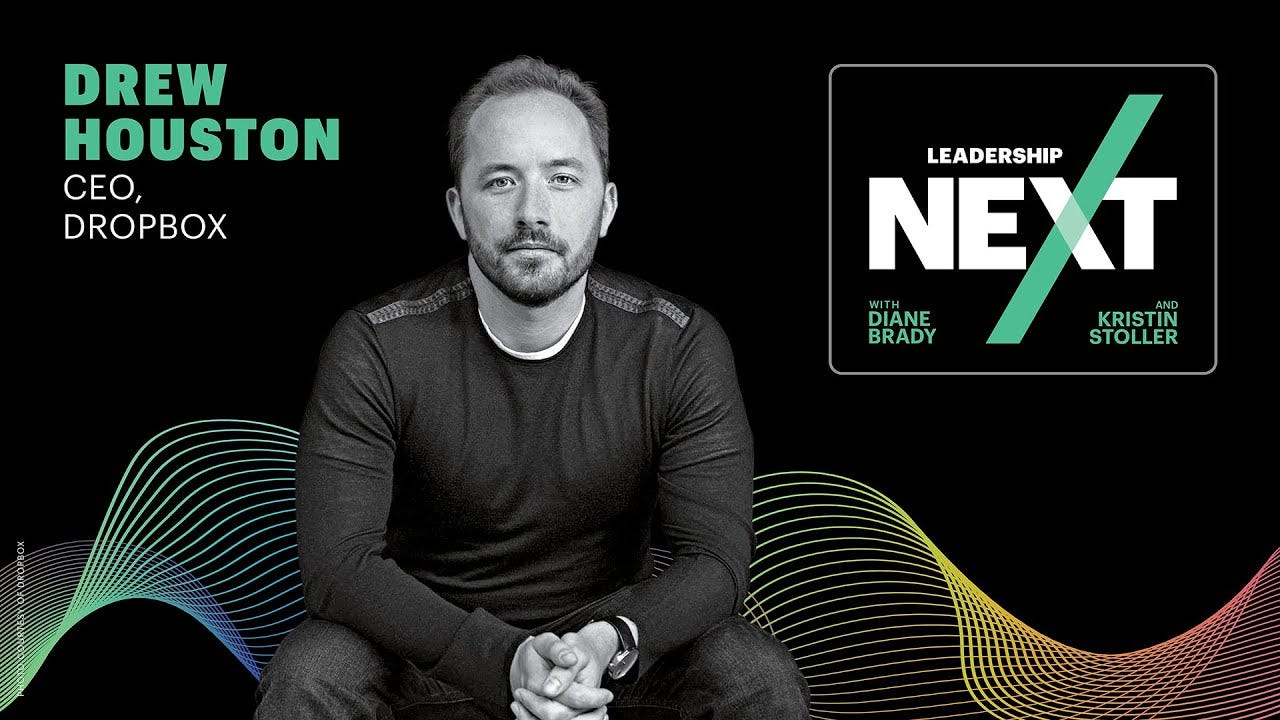
Everyone knows the Dropbox story.
Drew Houston built a product demo video because he couldn’t find enough storage space and was tired of emailing himself files. The video went on Hacker News. Hundreds of thousands of people signed up overnight. The waitlist validated the idea.
That’s the story that gets told.
Here’s the story that doesn’t.
The Y Combinator Moment
Before Dropbox was Dropbox, before the famous demo video, before the $4 billion acquisition by... wait, Dropbox didn’t get acquired. Before the IPO there was Y Combinator.
Drew Houston applied to YC in 2007 as a solo founder. Paul Graham told him he needed a co-founder.
Houston reached out to Arash Ferdowsi, a student he’d connected with through MIT. They’d been in overlapping circles the kind of warm community connection that MIT’s engineering community produces. Not close friends. Known quantities to each other through shared context.
Houston asked Ferdowsi to co-found. Ferdowsi dropped out of MIT to join.
The company that became one of the most valuable in tech history was born from a warm network connection a mutual community context, not a cold outreach.
The Sequoia Path
The path from YC to Sequoia’s investment in Dropbox runs through exactly the warm intro infrastructure we’ve been discussing throughout this series.
YC demo day gave Dropbox visibility among investors who trusted YC’s curation. The Hacker News demo gave them community validation. Early YC alumni investors who had seen Houston operate provided the warm signals that preceded institutional investment.
Sequoia’s investment came through a trust chain that ran through the YC ecosystem through people who had seen Houston build, who trusted his technical judgment, who had watched the product gain real traction.
Not cold email. Not a speculative pitch to an unfamiliar partner.
A trust chain in which every link had earned the credibility to vouch for the next.
The Demo Video Myth
The Dropbox demo video story has been used to argue that exceptional products will always find their audience — that if you build something good enough and show it clearly, the market will respond.
That’s true, as far as it goes.
But the demo video didn’t fund Dropbox.
It validated the market.
The funding came through warm paths.
And the warm paths came through community: MIT, YC, Hacker News, the San Francisco early startup ecosystem.
The product was the proof. The trust network was the path.
Both were required.
The Generalized Lesson
Every iconic fundraising story has a demo video layer and a trust network layer.
The demo video layer gets told because it’s accessible it’s the product story, the validation story, the “they built something people wanted” story.
The trust network layer gets overlooked because it’s less visible it’s the community story, the relationship story, the “someone trusted said their name in the right room” story.
Both layers are real.
But if you remove the trust network layer from most iconic fundraising stories, the companies don’t get funded. Not because the products weren’t good enough. Because the investors who would have funded them never got a meeting.
The lesson for every founder: build both layers.
Build the product that would justify the investment. Build the trust network that creates the path to the investor.
One without the other is incomplete.
