The Warm Intro That Saved Airbnb (and What It Teaches Founders Today)
One late-night application. One unexpected connection. One “warm path” that changed everything.

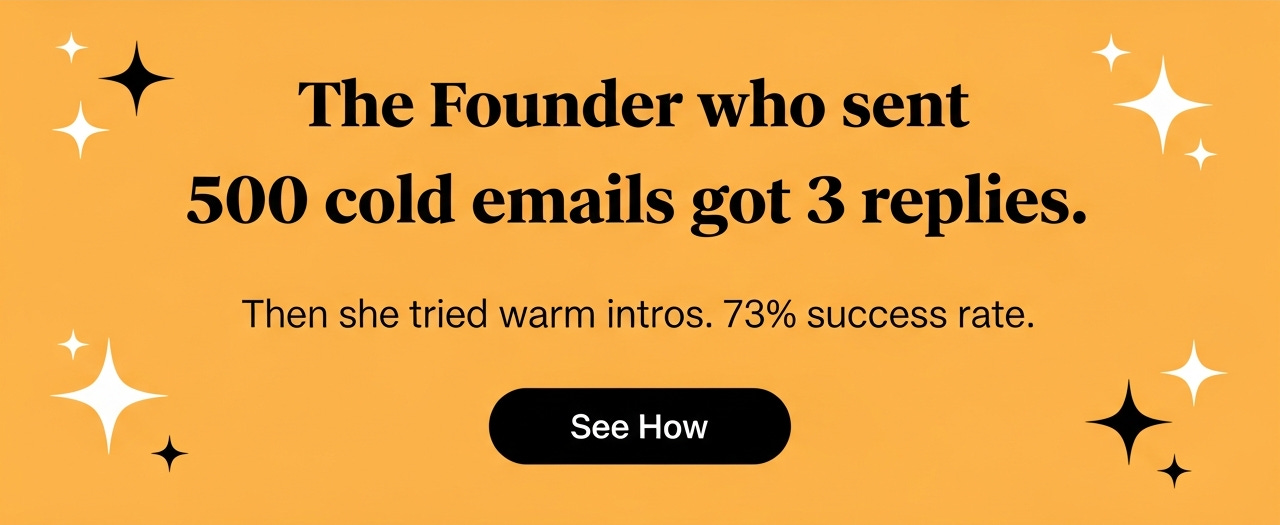
There’s a moment most founders hit where the math becomes depressing.
You can have a real product.
You can have a real market.
You can even have early users.
But if you don’t have distribution, credibility, or a pathway into the rooms that matter, you end up doing what most founders do: spray cold outreach and hope.
And the result is usually predictable:
low response rates
slow momentum
constantly “almost there”
and a long stretch where you feel like your startup is invisible
This is why warm intros are not a “nice to have.”
They’re a survival tool.
Airbnb is one of the cleanest examples of that.
Not the polished Airbnb you know today — the broke, chaotic, about-to-die Airbnb.
Airbnb was running out of time
In 2008, Airbnb was basically on life support.
The founders were low on cash, in debt, and not getting the traction they needed. The idea sounded weird to most people at the time, and investors weren’t exactly lining up to fund “strangers sleeping in strangers’ homes.” Wired recounts how desperate things were and how close the team was to running out of options.
Then they did something that sounds ridiculous until you realize it worked:
They created limited-edition cereal boxes tied to the 2008 election:
“Obama O’s”
“Cap’n McCain’s”
They sold them for $40 a box and brought in enough money to keep the company alive for a bit longer. This wasn’t a “marketing stunt” — it was rent money. It was survival.
And that’s where the warm intro story begins.

The warm intro that mattered wasn’t a “VC intro”
Most people think warm intros are only about raising money.
This one was different.
A turning point came through Michael Seibel (then tied to Justin.tv, later YC). Wired describes him pushing the founders to apply to Y Combinator even though they looked like they were dying — and crucially, helping them get their application in after the deadline.
That’s the part founders miss:
It wasn’t just “apply to YC.”
It was someone credible opened a door that was already closing.
That is the warm intro effect in its purest form:
speed
access
trust transfer
a real path into a decision-maker’s attention
The moment that changed the interview
Y Combinator interviews are famously short and intense. The Airbnb interview wasn’t going well.
But the founders brought the cereal.
Wired recounts how, at the end, the story of the cereal boxes flipped the room — it showed grit, creativity, and refusal to die. Paul Graham’s reaction became part of startup folklore.
Airbnb got in.
And once they were inside YC, they got what “cold” founders struggle to manufacture:
credibility
a stronger network
warmer access to future investors
tighter feedback loops
and momentum that compounds
Even Wikipedia’s history section reflects the cereal funding and YC acceptance as key steps early on.
What this teaches founders (and why cold outreach fails)
Cold outreach fails because you’re asking a stranger to do two jobs at once:
understand you
trust you
Warm intros compress that into one step because the trust is borrowed.
When you get a warm intro, the other person isn’t evaluating you from zero. They’re evaluating you from the credibility of the connector.
So, the real founder job isn’t “send more messages.”
It’s:
identify the rooms that matter
identify who already has trust in those rooms
and find the cleanest path to be introduced with context
This is also why events like Davos / SXSW / Tech Week can be deceptive. You can meet a lot of people and still leave with nothing, because the real wins come from pre-mapped paths, not random collisions.
The Introd angle: warm paths beat wide nets
At Introd, we’re obsessed with the same principal Airbnb accidentally demonstrated:
The best outcome isn’t “more outreach.”
It’s the right pathway to the right person, with the right context.
That’s why we think the future looks like:
fewer cold emails
more trust-based routing
more context-aware intros
more “who can introduce me?” instead of “who can I spam?”
And yes — we’re building for founders, operators, investors, and anyone whose success depends on access.
If you want to use this right now
Here’s a simple move you can make today:
Pick one person you want to reach.
Then write down:
5 people who already trust you
5 people who likely know them
and the single cleanest connector who can introduce you with context
That’s the warm intro mindset.
Not “reach out harder.”
Route smarter.