
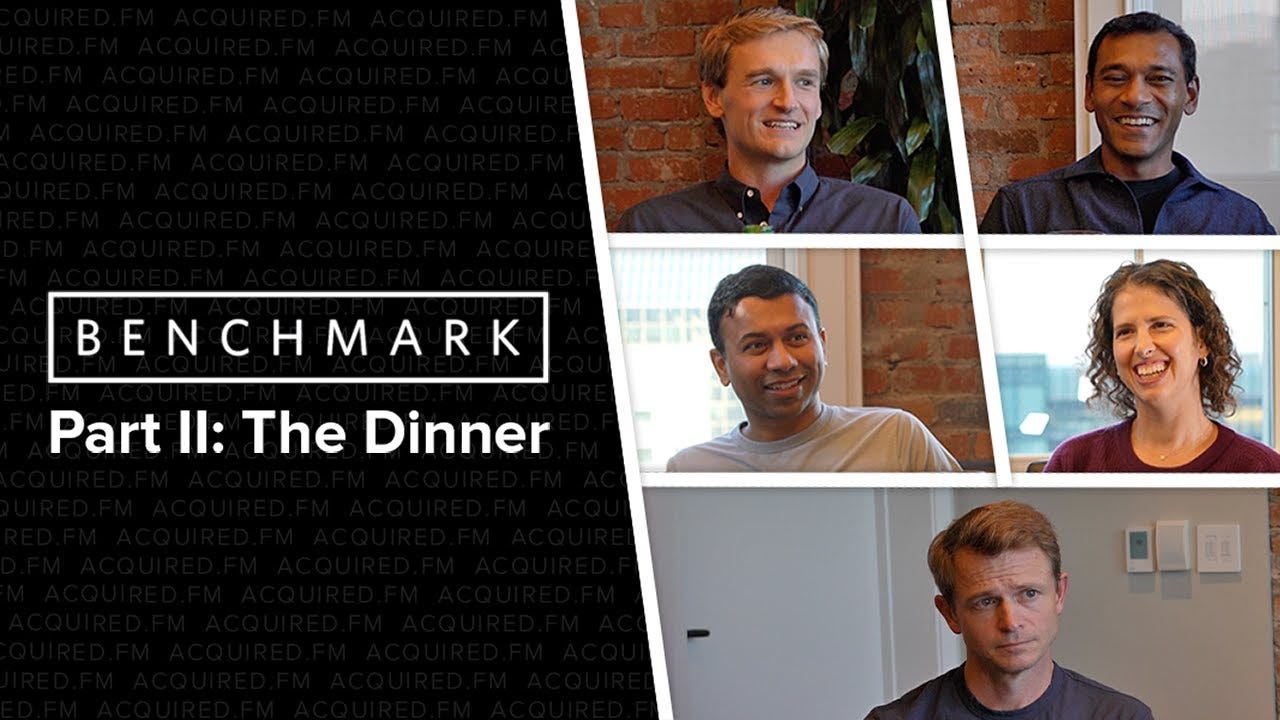
Benchmark Capital and Andreessen Horowitz represent almost opposite philosophies in venture capital.
Benchmark: small team, equal partnership, generalist, deeply operational. Six partners. No platform team. No scout program. Total focus.
a16z: large team, hierarchical, sector-specific, heavily platform-oriented. Dozens of partners. Enormous support infrastructure. Full-service firm.
These two firms have disagreed publicly, in some cases about what venture capital should look like.
But ask founders at both firms how their investments were sourced, and you find striking agreement on one thing:
The best companies almost always came through warm trust networks.
Benchmark's Network Philosophy
Benchmark has always been a small-team firm by design. The partnership has stayed deliberately tight. There are no managing directors, no venture partners, no associate layers.
What there is: a dense, high-quality personal network built over decades of backing exceptional founders.
Bill Gurley built his reputation through his newsletter (Above the Crowd) and his deep relationships with consumer internet founders. His deal flow Uber, DoorDash, Stitch Fix, came through trusted referrals from founders and operators who respected his judgment.
Peter Fenton's investments similarly trace through warm networks: Twitter, Elastic, Zendesk, all connected to existing relationships and trusted referrals.
Benchmark's model is trust-network as competitive advantage. They can't out-resource a16z. They can't out-scale Sequoia. What they can do is build such deep trust relationships with the best founders that those founders both come to them first and refer others to them.
It works. Consistently.
The Convergence Point
Here's the fascinating thing: despite their structural differences, Benchmark and a16z have converged on the same sourcing reality.
a16z built an enormous infrastructure to amplify warm signals at scale. Platform team, scout program, communities, content — all of it designed to surface warm trust signals from a larger surface area.
Benchmark built an extremely concentrated version of the same thing: fewer, deeper, more personal trust relationships that surface the very best companies.
Different mechanisms. Same insight.
Warm relationships are the raw material of venture.
What This Means for the Founder Across the Table
When you're meeting with a Benchmark partner or an a16z partner, something important is already true by the time you sit down:
Someone they trust has already decided you're worth their credibility.
The meeting is not a cold evaluation. It's a trust-amplified conversation.
Your job in that meeting is not to convince them you're worth meeting. They've already answered that question. Your job is to confirm what the warm intro suggested: that you're the real thing.
This is why warm intro meetings close at dramatically higher rates than cold outreach meetings.
The investor enters warm meetings pre-disposed to say yes, looking for reasons to invest. They enter cold meetings skeptical, looking for reasons to pass.
The psychological frame is completely different.
And the warm intro is what sets it.
